
How to assess the impact and risks of trees near buildings?
Understand the surroundings of your buildings
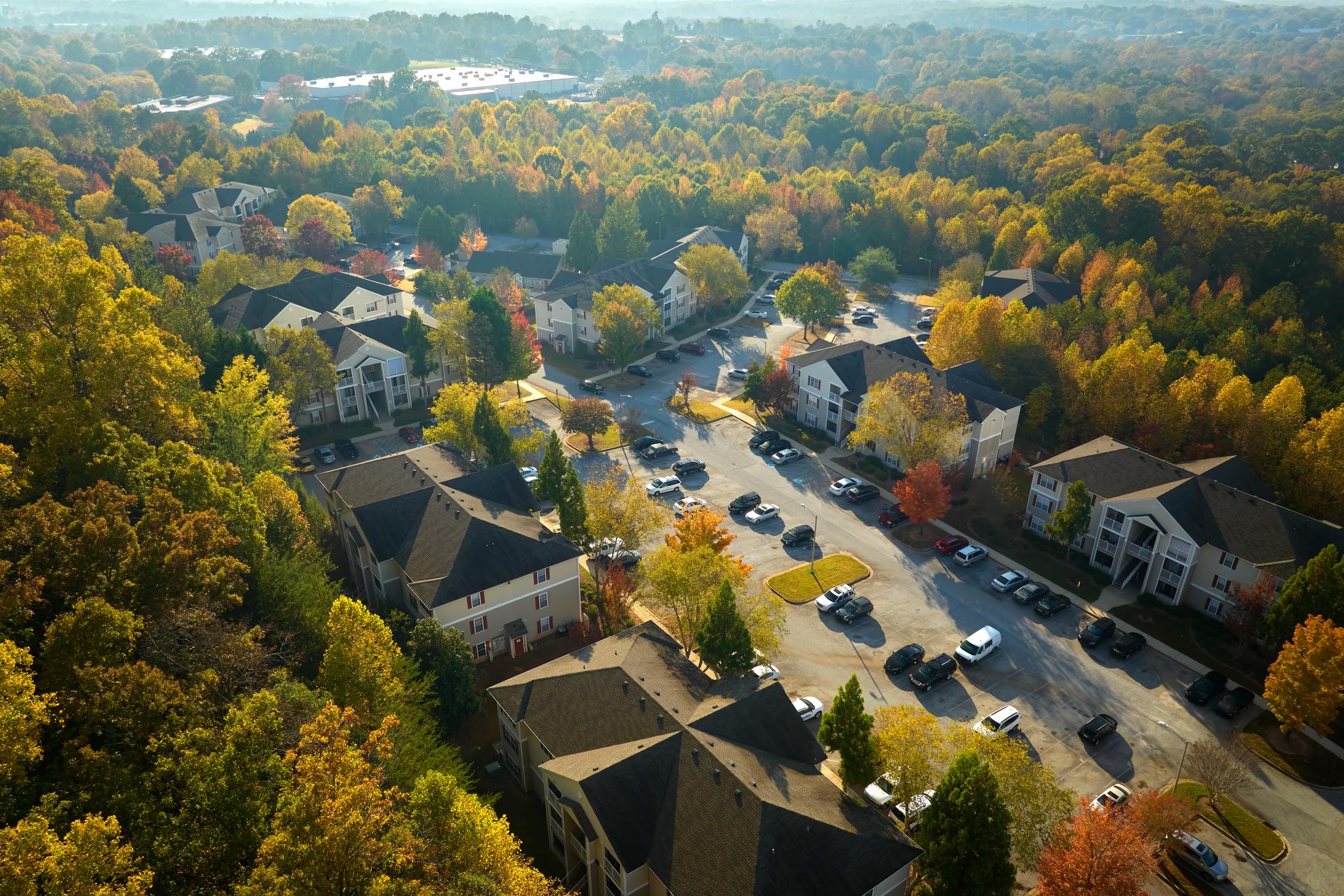
Trees bring shade, cooling and biodiversity to the areas
around your buildings. But when they grow close to a property,
they can also create challenges for the people responsible
for managing it.
For example:
- A tree close to a roof may increase exposure to falling
branches during a storm. - A large canopy may cast shade on a roof where solar
panels are planned.
If you manage hundreds or thousands of buildings, checking
their surroundings one address at a time can be difficult.
So, how can you get a clearer picture of the trees around
your buildings?
Start by locating and measuring nearby trees
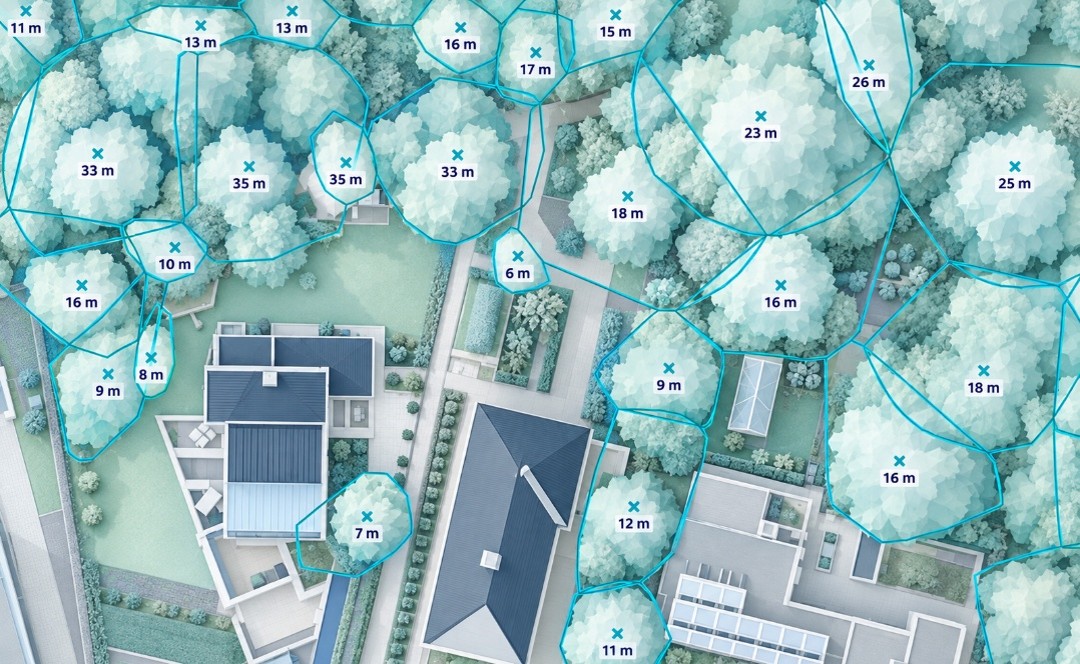
The first step is to understand where trees are in relation to each building and how large they are.
Zadu combines LiDAR data and artificial intelligence to identify individual trees across a country and determine their location, height and canopy width. This information can then be linked to nearby buildings, making it possible to examine the relationship between a property and its surrounding greenery.
Instead of relying solely on aerial imagery or site visits, users can access consistent tree data across a group of buildings or an entire portfolio.
What can you learn about trees around a building?
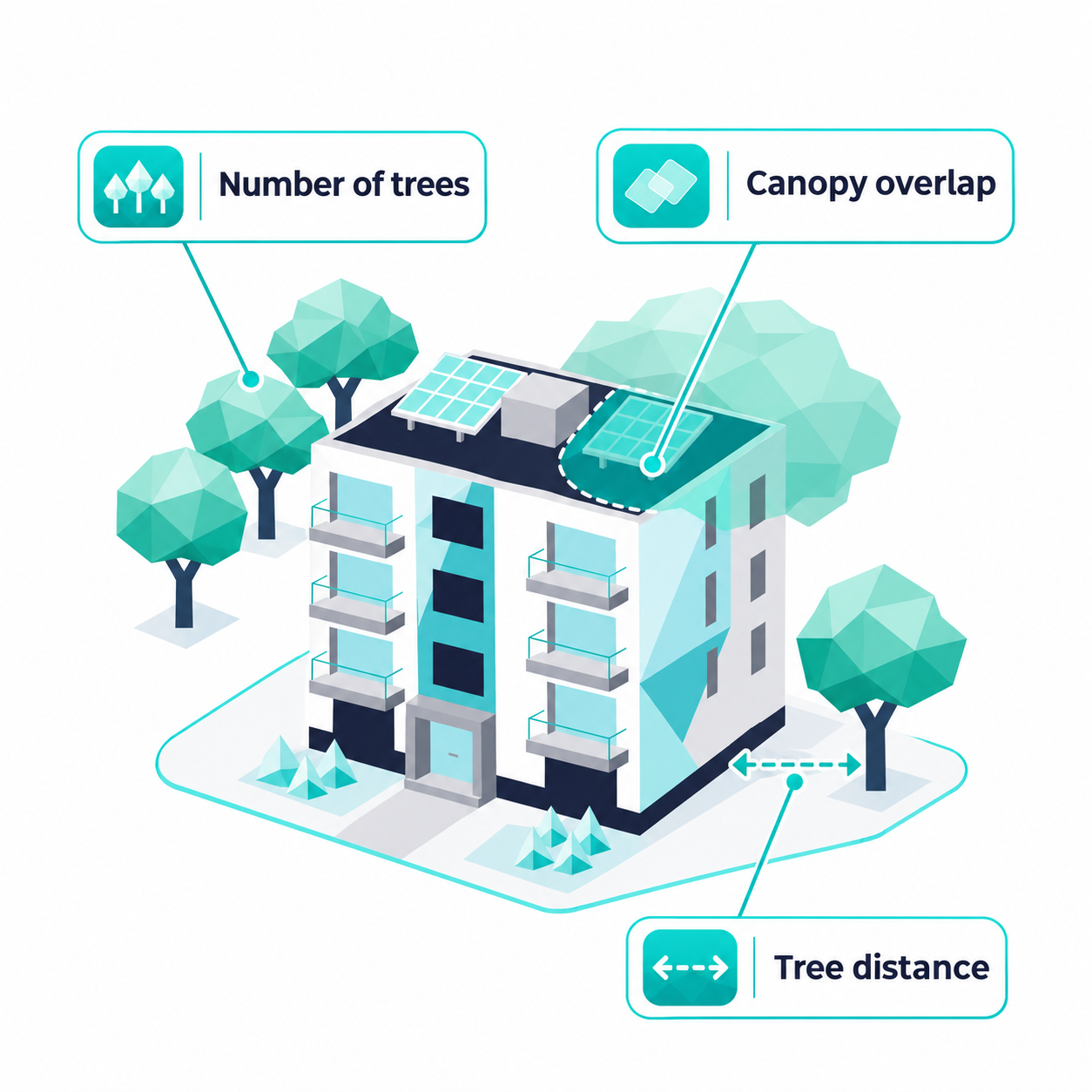
Zadu’s Building Tree Proximity Module connects tree data
to nearby buildings. It helps you understand:
| Indicator | What it shows |
|---|---|
| Tree distance | How close trees are to the building. |
| Number of trees | How many trees are located nearby. |
| Canopy overlap | How much the tree canopies overlap with the building. |
These indicators help you identify buildings where nearby
trees may require a closer look for example, when assessing
storm exposure, maintenance needs or potential shading.
The data provides a starting point for assessment. It does
not, on its own, determine the health of a tree or predict
whether it will cause damage.
How can this information be used?
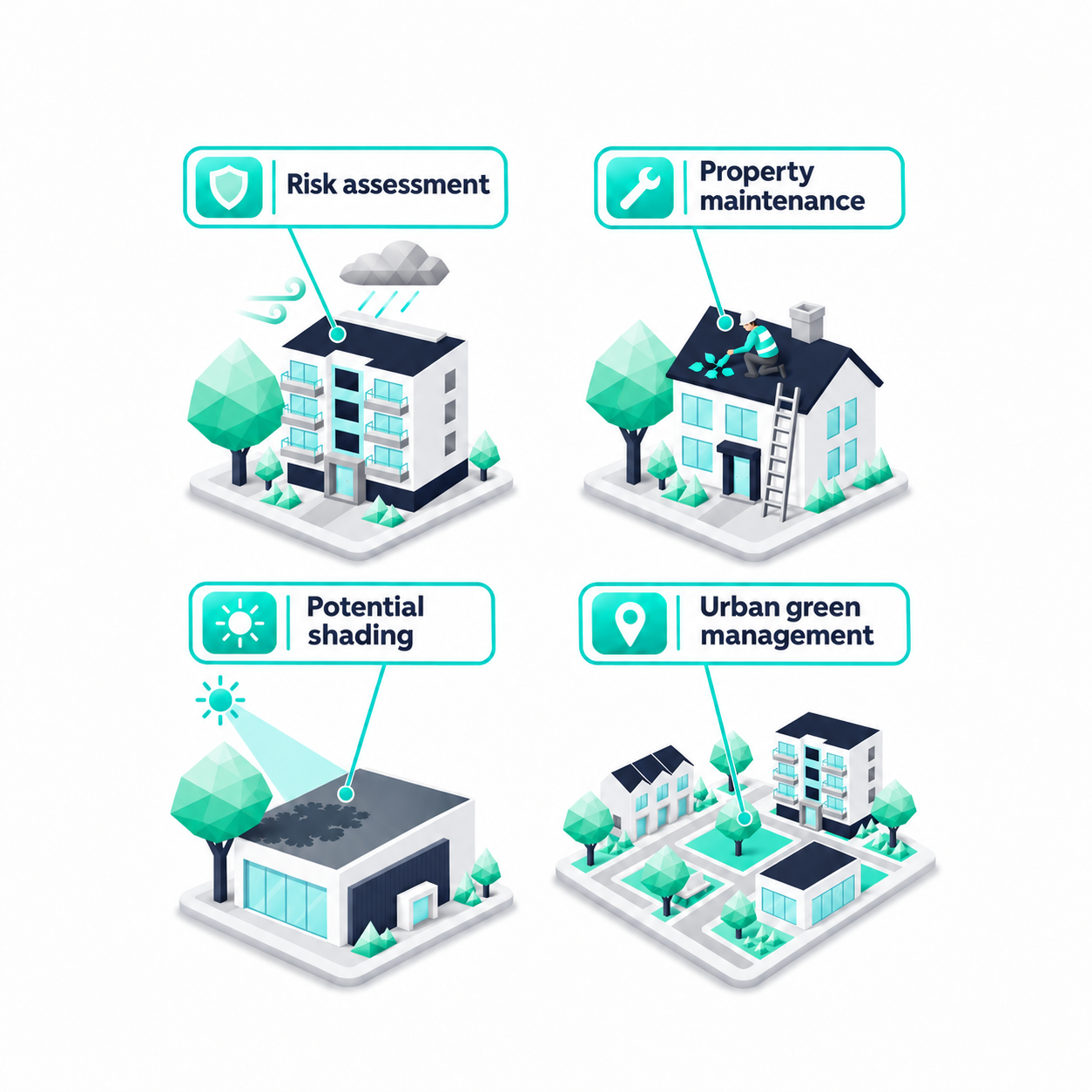
Tree data can support different decisions, from assessing
exposure to planning maintenance and energy projects.
| Application | How tree data can help |
|---|---|
| Risk assessment | Help insurers and risk managers identify buildings that may be more exposed to falling branches or storm damage. |
| Property maintenance | Help property managers identify trees close to roofs or façades and support maintenance planning. |
| Potential shading | Identify roofs where nearby trees may create shade and should be considered before installing solar panels. |
| Urban green management | Help local authorities understand the distribution of trees around buildings and support spatial planning. |
In short
Key takeaways
- 01Benefit and riskTrees can provide shade and cooling, but may also require attention when assessing storm exposure, maintenance or solar potential.
- 02Detected with LiDAR and AIZadu uses LiDAR and AI to identify trees across Belgium and determine their location, height and canopy width.
- 03Proximity per buildingThe Building Tree Proximity Module shows how many trees are near a building, how close they are and whether their canopies overlap with it.
- 04Focus your assessmentsThis information helps you identify properties that may need a closer assessment.
Want to assess the impact of trees around your buildings?
Discover how Zadu’s tree data can help you assess their surroundings and identify properties that may need a closer look.